
(This article was written originally on May 10, 2006, and has been updated.)
In November 2025, awareness of 50-year mortgages hit the national airwaves following some statements of proposal by President Trump.
What are the implications of a 50-year mortgage to homebuyers? We’ll discuss some of the implications below.
The 30-year mortgage we all “know and love”
Conventional residential loans have largely been no longer than 30 years since the years following World War II. They were authorized by Congress for new home construction in 1948, and for existing homes in 1954. By the 1960s, they were the standard.
Borrowers can pay off a 30-year fixed-rate mortgage with 360 equal monthly payments over 30 years.
Let’s take a reasonable example from numbers current as of November 2025.
A house slightly above the US median price is $500,000. Current average 30-year fixed mortgage rates are a bit above 6% but we’ll call it 6%.
If a family pays 20% down on this house, they would borrow $400,000.
The monthly payment on this, from a mortgage calculator I’ve used for more than 20 years, is $2,398.20, not including taxes or insurance.
Some fun facts about this mortgage:
- Out of the first payment, $2,000.00 goes toward interest and $398.20 goes toward principal. The interest part is more than five times the principal part.
- After seven years of payments, the principal has been reduced $41,442.25 to $358,557.75, or a little over 10% of the original amount.
- During the same time, the interest paid is $160,006.55, almost four times the principal reduction.
- The mortgage is half paid-off in month 252, or 21 years into the mortgage.
- The total interest paid at this point is a bit over $400,000, slightly more than the original borrowed amount.
- At payoff, the total interest paid on the $400,000 mortgage is $463,354.04, or 116% the borrowed amount.
- On the plus side, though, that $2,398.20 payment would feel more like an $1,100 payment due to inflation.
50-year mortgages are not new, by the way.
I first ran across them in 2006.
It was a bit of a different time back then. This was a time of very easy mortgage approvals, which soon after saw large default rates in 2008 and a consequent bank bailout of hundreds of billions of dollars.
I recall being a bit jealous at the time of people I knew buying and selling their houses for six-figure profits, basically doing absolutely nothing. I guess the same thing could be said about any appreciating asset, so my jealousy was misplaced.
Anyway, these are my characteristically-flippant thoughts from back then.
Original post from 2006
It’s Your Money posted on this one. Yet one more extremely “creative” mortgage for homeowners in California:
50-Year Mortgage Debuts in California
If we look at a 6% interest rate on a $500k loan, your P&I payment is about $3,000, the interest paid over the life of the loan is $579k, and you have about $35k of the principal paid off in 5 years. With a 6%, 50-year loan, the payment is about $2,630, you pay over a million dollars in interest, and have only paid about $10k of the principal in five years.
According to the article, some 50-year mortgages offered are even adjustable rate!
This really smells like a bottom-of-the-ninth attempt for bankers to get just a little bit more in loan origination fees in an already overtapped and overleveraged market, and pass off the falling knife “debt investment” to someone else. I can think of absolutely no good reason, in what is clearly an inflated housing market and a tightening interest rate policy, why someone would lend out money at a fixed rate for 50 years if they intended to keep the mortgage note. Forget about the debtor being gone in 50 years — the house could be gone in 50 years! Especially if it’s in suburbia.

30-year vs. 50-year mortgages and what the math says
Let’s consider the same $500,000 house, but apply a hypothetical 50-year mortgage to it.
Analysts expect that a 50-year mortgage will carry around a 0.5% higher rate than a similar 30-year mortgage.
So, with the same 20% down and the same borrower, the rate would be around 6.5%. Longer mortgage terms carry a higher interest rate because there is more interest rate risk as we go further into the future.
I’ll put the information side by side in a table for a quicker comparison.
| Information | 30-year mortgage | 50-year mortgage |
| Borrowed amount | $400,000 | $400,000 |
| Interest rate | 6.0% | 6.5% |
| Monthly payment | $2,398.20 | $2,254.87 |
| First payment principal | $398.20 | $88.20 |
| First payment interest | $2,000.00 | $2,166.67 |
| Principal balance after 7 years | $358,557.75 (-$41,442.25) | $390,649.27 (-$9,350.73) |
| Interest paid after 7 years | $160,006.55 | $180,058.35 |
| Time to pay half of the mortgage | 21 years (252 months) | Almost 40 years (479 months) |
| Total interest paid in $ (in %) | $463,354.04 (116%) | $952,911.46 (238%) |
Some observations about this comparison:
First, the monthly payment is lower by $143.33. If the monthly payment is the measure, the 50-year mortgage makes the $500,000 house more affordable.
Every other measure, though, shows the 50-year mortgage to be more costly than the 30-year:
- More of the payment goes to interest each month, every month.
- Less goes toward reducing principal each month, every month.
- It takes two full years for the principal part of the payment to exceed $100.
- The percentage of interest paid is higher.
- The borrower has less equity in the house year for year.
- After 7 years, the principal hasn’t decreased even $10,000.
- $20,000 more in interest than the 30-year has been paid, though.
- The total interest paid over the entire loan is more than twice that for a 30-year mortgage.
50-year mortgages are Ex. Pens. Ive.
To be fair, the introduction of the 30-year mortgage was a similar jump in expense from what was offered before. Paying nearly twice for the house in the 30-year example isn’t cheap.
So when I say that the 50-year is expensive, it’s more expensive than something that’s already quite expensive.
Expensiver, if you will.
Buyer beware.
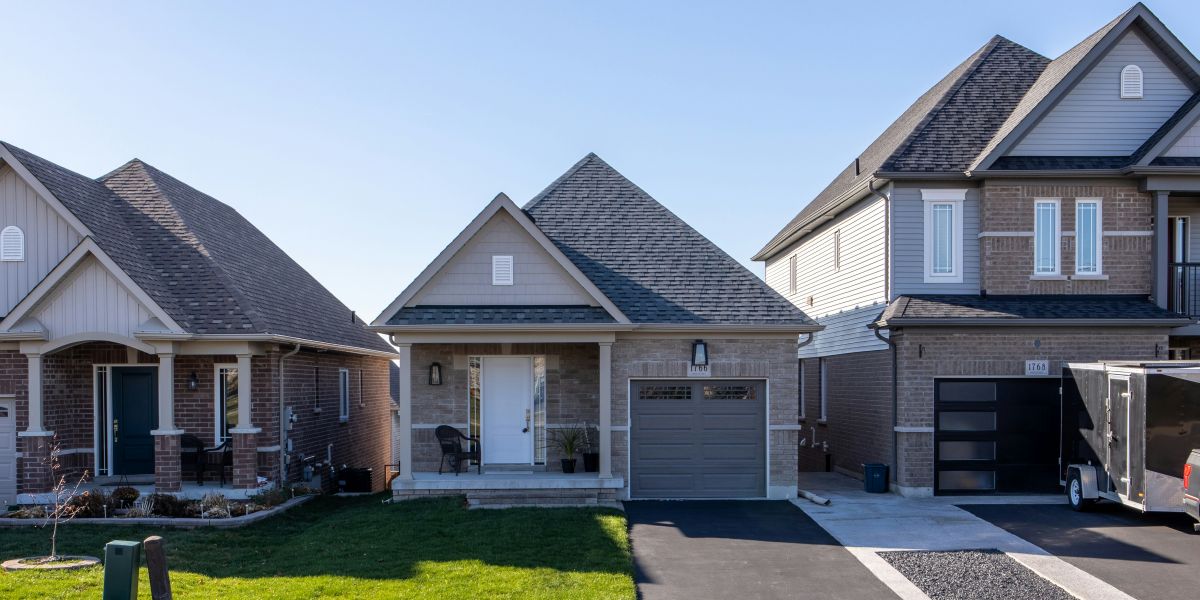
Photo by Dillon Kydd on Unsplash

the banks know that most people don't stay in their loan for the full term. either people move or they refinance which is why they can extend to 50 years.
Lpkitten that's true — 50-year mortgages are badly front-loaded with the interest.